
Namma Auto: Sustainable Mobility in a Changing City
The Challenge:
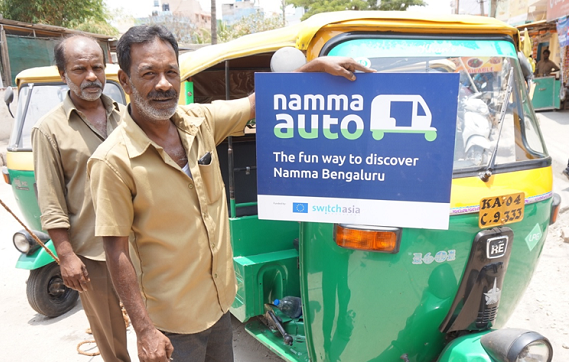
The strategy began with adoption: getting commuters to see shared, cleaner auto-rickshaws as part of the city’s mobility network, while drawing attention to the challenges drivers faced.
Then, in March 2020, the lockdown changed everything.
Promoting shared transport was suddenly impractical and inappropriate. We paused the original messaging and rebuilt the campaign around public health, driver welfare and safe mobility.
Radio and digital content shifted to masks, sanitisation and contactless payments, while highlighting Namma Auto’s safety kits, medical insurance and financial support for drivers. We also reframed the auto-rickshaw as an open-air, lower-density option for safer post-lockdown travel.
Partnerships with Three Wheels United and Lakshya linked the programme’s long-term goals of clean transport and financial inclusion with immediate support for drivers.
Strategic Communications, Media Relations & Integrated Campaign Management
The Approach
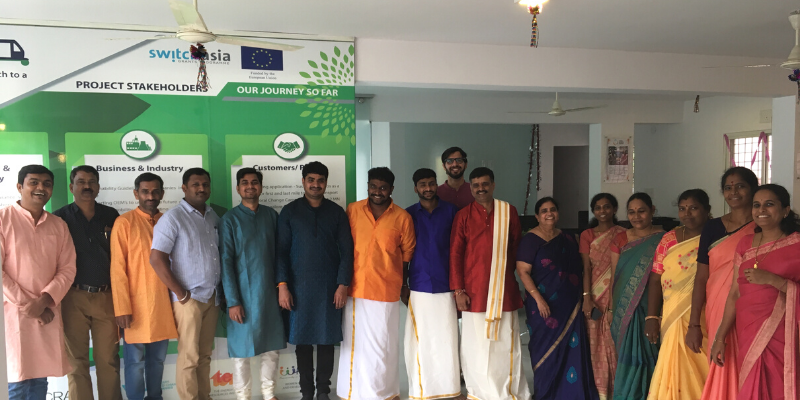
The programme brought together research, finance, driver welfare and policy, and our approach was to make that complexity easy to grasp.
Rather than treat Namma Auto as a single transport campaign, we told the story of the system it was trying to change: how cities move, who keeps them moving, and what a cleaner transition means for the drivers whose livelihoods depend on it.
What We Built
A narrative linking sustainable mobility with livelihoods, pollution and last-mile connectivity
Research-led press stories that made technical and policy findings accessible
National and regional media strategy across print and digital
Thought-leadership positioning for Project Manager Manju Menon
Communications on technology, driver financing, cooperatives and regulatory reform
English and Kannada radio with Radio One 94.3 and Radio City 91.1: scripts, jingles, RJ mentions and interviews
Social media campaigns amplifying radio and press coverage
Driver stories on financial security, welfare and the shift to cleaner vehicles
The Outcome
Coverage included The Hindu, The Times of India and YourStory, alongside regional and sustainability-focused media.
Across print, digital, radio and social, the campaign generated an estimated 70–74 million impressions. Radio alone delivered around 18 million exposures, and digital reached roughly one million people.
Beyond scale, the work gave a complex, multi-partner programme one clear public story. Research became media stories, policy became relevant to commuters, and sustainability was tied to livelihoods. When the pandemic changed everything, the communications changed with it.
What began as a campaign for cleaner mobility became a story about the people, systems and partnerships that keep a city moving.